
The difference comes down to how the heat reaches you. A traditional sauna heats the air in the room, and the hot air heats you. An infrared sauna skips the air and warms your body directly with radiant heat, so the room stays cooler while you still work up a sweat. A hybrid unit does both, in the same cabin, so you can pick the experience session by session.
That one distinction drives almost every other decision: how hot the room gets, how long you wait before you can use it, how much room it needs, and what kind of power it takes. Here is how the three compare, and how to tell which one fits your home.
How each type produces heat
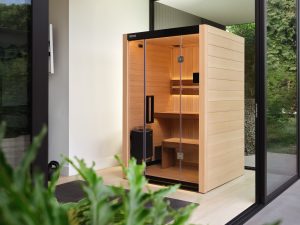
A traditional sauna uses a heater filled with stones. The heater warms the air, the air warms the room, and the room warms you. Pour water over the stones and you get a burst of steam, which is the part most people picture when they think of a Finnish sauna. The heat is enveloping and the air is genuinely hot.
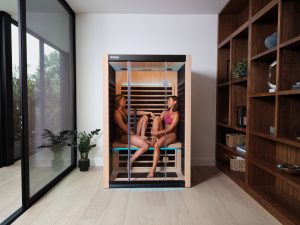
An infrared sauna uses panels that emit infrared energy. That energy is absorbed by your skin rather than by the air around you, so you feel warmth on your body while the room itself sits at a much lower temperature. There is no water on rocks and no steam.
A hybrid combines both systems in one cabin. You run it as an infrared session on a weeknight and as a traditional session on a Sunday, without buying two rooms.
Temperature and how the session feels
Traditional saunas run hot. The air temperature is the main event, and sessions tend to be shorter and more intense, often broken into rounds with a cool down between them.
Infrared saunas run at a noticeably lower room temperature. Because the heat is landing on you rather than filling the room, many people find they can stay in longer and breathe more comfortably. If a very hot room has put you off saunas before, infrared is usually the format worth trying first.
Neither one is the correct answer. It is a preference, and it is the single best reason to sit in both before you buy rather than choosing from a spec sheet.
Warm up time
Infrared saunas are ready quickly, which matters more than people expect. If your sauna is a weeknight habit rather than a weekend event, a shorter warm up is the difference between using it and not.
Traditional saunas take longer to bring the room and the stones up to temperature. Owners usually plan around it, starting the heater before dinner and using it after. Some models offer scheduling or remote start to close that gap. If that matters to you, ask about it on the specific model you are considering, since the feature varies by line.
Space and placement
Infrared cabins are often the more compact option and are commonly placed indoors, in a spare bedroom, a finished basement, a home gym, or a large bathroom. Traditional saunas are available both indoors and outdoors, and an outdoor room opens up the classic hot room to cold air contrast that a lot of owners are after.
Whichever direction you lean, the space needs a level floor, clearance around the cabin, and a plan for ventilation. Our home sauna collection includes indoor and outdoor options in a range of sizes, and the sizing conversation is much easier once you have a room in mind and a tape measure in hand.
Power requirements
This is where the two formats separate the most. Smaller infrared cabins are frequently designed to run on a standard household circuit, which keeps the installation simple. Traditional heaters generally draw more power, and larger rooms more still, which often means a dedicated circuit run by a licensed electrician.
We are not going to give you a number here, because the honest answer is that it depends on the model and on what your panel can support. Every sauna publishes its own electrical requirement, and a licensed electrician should confirm it against your home before you order. If you want to see the requirement alongside the room sizes, our sauna pricing guide lays out the current collections.
Who each one tends to suit
Infrared tends to suit people who want a gentler, longer session, who are putting the sauna indoors, and who want the simplest possible install.
Traditional tends to suit people who want the authentic high heat experience, who like steam, and who are building an outdoor wellness space rather than fitting a cabin into a spare room.
Hybrid tends to suit households where two people want two different things, or where you genuinely cannot decide. It is also the practical answer when you only have room for one cabin and you want to keep both options open.
A note on wellness claims
Saunas are a relaxation and recovery habit. Plenty of owners tell us a session helps them unwind at the end of the day or loosen up after a workout, and that is a fair description of what a sauna is for. It is not a medical device, and we are not going to tell you it treats anything. If you are pregnant, have a heart condition, have low or high blood pressure, or take medication that affects how your body handles heat, talk to your doctor before starting sauna sessions.
Common questions
Is an infrared sauna as good as a traditional sauna?
They are different experiences rather than better and worse. Traditional saunas give you high air temperature and the option of steam. Infrared gives you a lower room temperature and a longer, gentler session. The one you will actually use several times a week is the right one for you.
Which type of sauna is easier to install at home?
Infrared cabins are generally the simpler install, since many smaller models are designed for a standard household circuit and an indoor location. Traditional saunas usually need more power and, if you are going outdoors, a prepared base. A licensed electrician should confirm requirements for the specific model either way.
What is a hybrid sauna?
A hybrid sauna has both a traditional stone heater and infrared panels in the same cabin, so you can run either type of session. It suits households that want both experiences without the space or budget for two separate rooms.
How long does a sauna take to heat up?
Infrared cabins are ready relatively quickly, while traditional saunas need longer to bring the room and the stones up to temperature. Exact times vary by model and room size, so check the specification on the sauna you are considering.
Sit in all three before you decide
Reading about heat is not the same as feeling it. We keep saunas on display at our New Jersey showrooms so you can sit in a traditional room, then an infrared cabin, and notice which one your body actually prefers. Come see us in Green Brook, Denville, or Toms River, or request pricing and one of our wellness consultants will walk you through the options for your space.