
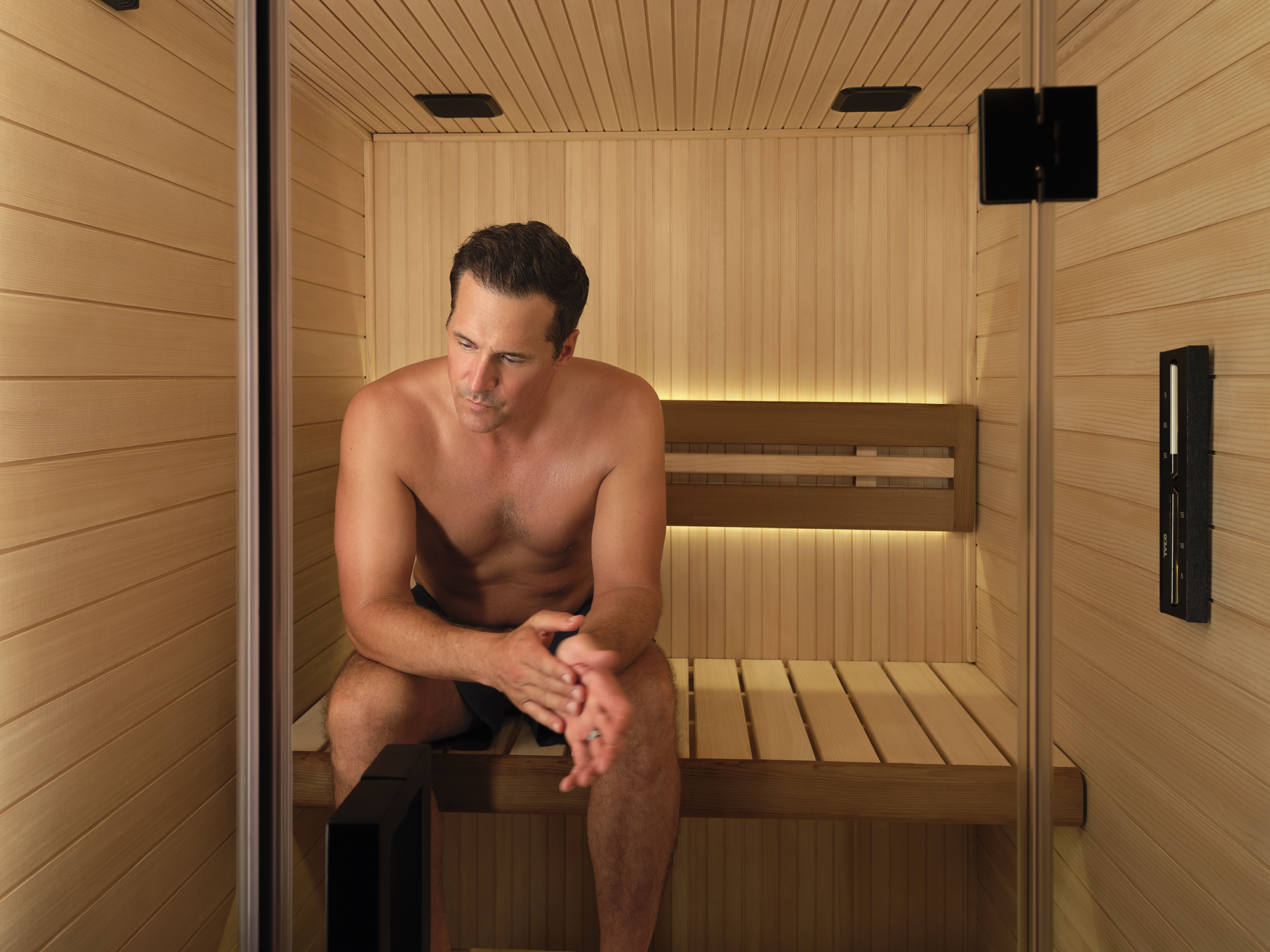
Sauna 101: the four types of home sauna
A sauna is a heated room built for short, regular heat sessions. How that heat is produced is the single biggest decision you'll make. It shapes temperature, session length, electrical requirements, where the room can go and what it costs.
Two ways to heat a sauna
Every sauna on the market uses one of two approaches, or both. Convection heats the air around you. A heater warms a bed of stones, the stones warm the air, and the hot air warms your skin. That's a traditional Finnish sauna, and it's why the room runs 150–190°F.
Radiant heat skips the air. Infrared panels emit energy that your body absorbs directly, the way sunshine warms you on a cool day. Because the air itself stays 110–140°F, sessions feel gentler and can run longer even though you still sweat heavily.
Neither is "better." They're different experiences, and the right one depends on how you want a session to feel, where the room is going and what electrical service you have. Our wellness consultants walk New Jersey homeowners through this every day in Green Brook, Denville and Toms River, and this page is that same conversation, in writing.
- Traditional: hottest, steam, 10–15 min sessions, needs 240V
- Infrared: gentlest, no steam, 20–40 min sessions, often plugs in
- Hybrid: both systems in one room, one at a time
- Outdoor: either heat, sited in the yard on a level pad
The traditional sauna
An electric heater warms a bed of stones, which warm the air to 150–190°F. Ladle water over the rocks for löyly, the burst of soft steam that defines the Finnish experience. Sessions are short and invigorating, and two-tier benching makes it the most social of the four.
Needs: Dedicated 240V circuit, tile or sealed concrete floor, ~7′ ceiling. Heats in 30–45 minutes.


The infrared sauna
Radiant panels warm your body directly rather than heating the room, so the air stays around 110–140°F. Gentler and longer, 20 to 40 minutes, comfortably. Most cabins assemble in an afternoon and plug into a standard outlet, which makes this the easiest first sauna by a wide margin. No rocks, so no steam.
Needs: Often just a standard 120V outlet; can sit on finished wood floors. Ready in 15–30 minutes.
The hybrid sauna
Both systems in one room, run one at a time. High heat and steam when you want intensity; low-temperature radiant heat when you want a long, quiet session. The answer for a household that can’t agree, or anyone who wants to choose by mood.
Needs: Dedicated 240V circuit, same as traditional.

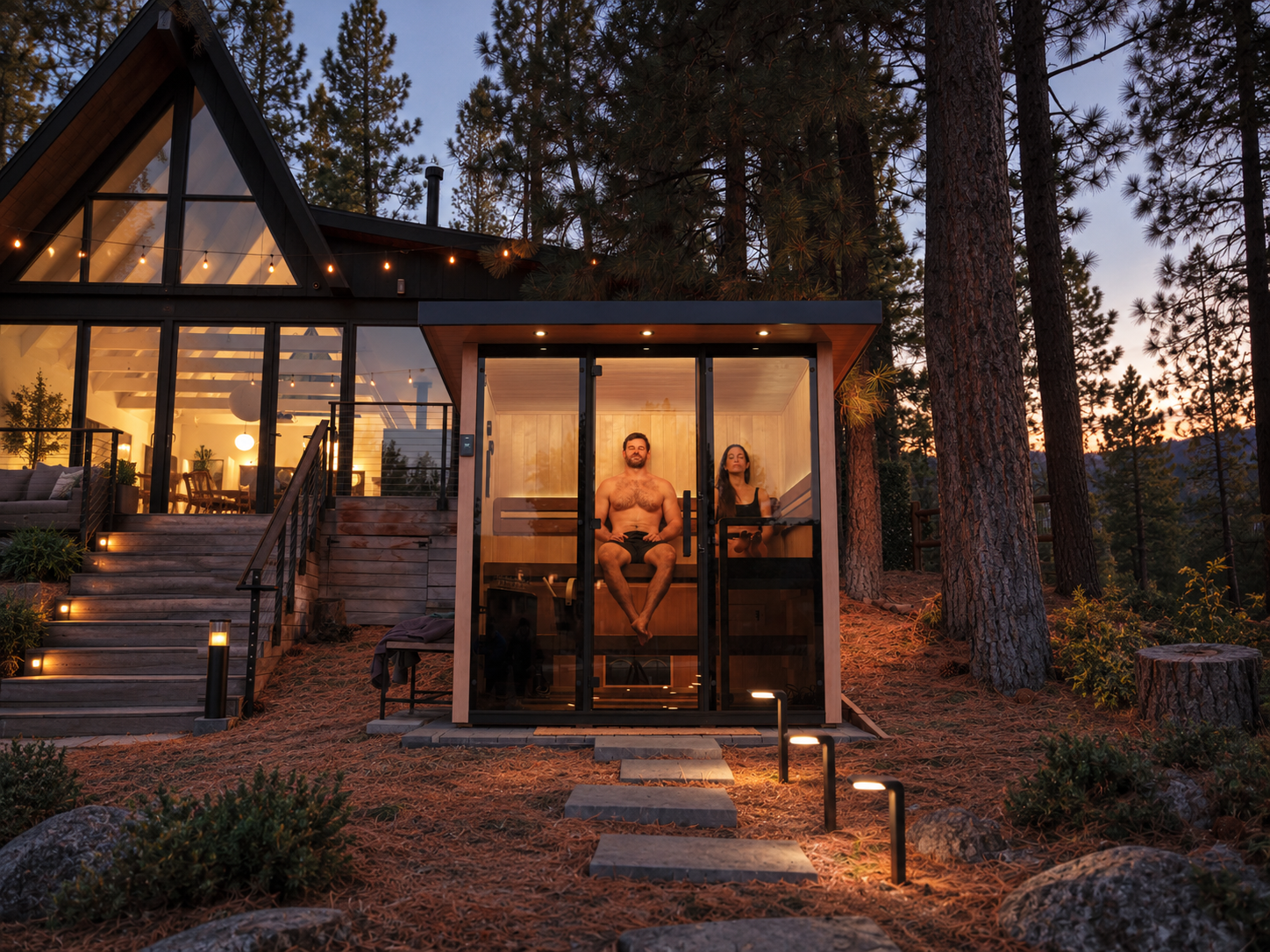
The outdoor sauna
A weather-built cabin or barrel sauna sited in the yard, often beside the hot tub or cold plunge. Same traditional or infrared heat inside. The difference is a shell sealed for New Jersey winters. You free up indoor square footage entirely and get the step-into-cold-air ritual.
Needs: A level, well-drained pad or rated deck and an outdoor electrical run.
Wood, heaters, glass and benching
Once you've chosen a heat type, these are the details that decide how the room actually feels to sit in. They're also the details that are hard to judge from a spec sheet, which is why we keep rooms running on our showroom floors.
Wood species
Western red cedar is the classic: aromatic, dimensionally stable and naturally rot-resistant. Hemlock is nearly odorless, which suits anyone sensitive to scent. Aspen and basswood are pale, very low-resin and stay cool to the touch. Thermo-treated woods are kiln-modified for stability and a darker tone.
Heaters & controls
Heater output is matched to room volume. Undersize it and the room never gets there; oversize it and you waste energy. Wall-mounted and floor-standing units both work. Modern controls add timers, scheduling and app control so the room is ready when you are.
Glass
A full-glass front transforms a small room. It borrows light and keeps a compact sauna from feeling like a closet. Tempered safety glass is standard. More glass means slightly more heat loss, which the heater sizing accounts for.
Benching & layout
Bench depth decides whether you can lie down; two tiers give you a choice of temperature. Backrests, headrests and a foot rest matter more to real comfort than almost any number on a spec sheet. Duckboard flooring lifts your feet off a cold floor.
Sizing
Roughly 4′×4′ for one to two people, 4′×6′ for three, 5′×7′ for four or more with room to recline. Ceiling around 7′. Higher wastes the heat you're paying for, lower feels cramped.
Accessories
Bucket and ladle, a thermometer and hygrometer, sauna stones, backrests and aroma for traditional rooms. Small things, but they're what make the ritual feel finished. Browse accessories →
A quick way to decide
| If this is you… | Start with |
|---|---|
| I want steam and real Finnish heat | Traditional |
| I've never owned a sauna and want it simple | Infrared |
| I can't add a 240V circuit right now | Infrared |
| The household can't agree on temperature | Hybrid |
| No indoor space, but I have a yard | Outdoor |
| I want the full hot-and-cold circuit at home | Sauna + cold plunge |
The sauna brands in our showrooms
We only sell what we’re willing to service. Two lines cover the full range: heirloom Scandinavian rooms and accessible everyday cabins.

Swedish-built since 1949, Tylö is the reference point for a proper Finnish sauna: precise heaters, beautiful glass fronts and rooms built to last decades. Traditional, infrared, hybrid and outdoor models.

Golden Designs makes the approachable end of the category: Dynamic and Maxxus infrared cabins that assemble in an afternoon, plus traditional, hybrid and outdoor rooms. A strong first sauna without a renovation.
Come sit in one.
Thirty seconds on a bench answers more than an afternoon of research. Green Brook, Denville and Toms River.