
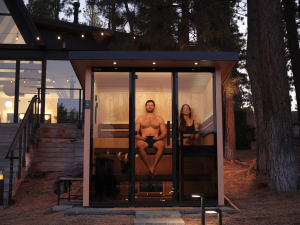
People buy outdoor saunas in the spring and fall in love with them in January.
That is not a marketing line, it is just how it goes. A sauna in July is pleasant. A sauna in February, when it is 25 degrees, the yard is white, and you walk back into the house afterward feeling completely reset, is a different thing entirely. Winter is the season this purchase makes sense for.
It also brings a handful of practical problems that nobody mentions in the brochure. Here is what actually happens when you run an outdoor sauna through a New Jersey winter, and how to set yours up so the cold never stops you using it.
Why winter is the best sauna season in New Jersey
The contrast is the whole experience. Going from a hot cabin into cold air is why the Nordic countries built this tradition in the first place, and New Jersey gives you three or four solid months of the right conditions.
There is also the simple matter of daylight and mood. December through February is when people are indoors, sedentary, and looking for something to structure the evening around. A sauna out the back door is a reason to leave the house without leaving the property.
The households that get the most out of a sauna are the ones that use it two or three times a week through the winter. Everything below is about removing the small frictions that stop that from happening.
Heat up time when it is below freezing
Your cabin will take longer to come up to temperature in January than in June. How much longer depends on the cabin size, the heater output, the insulation, and how cold it is outside.
What slows a cabin down
- Outside air temperature, obviously, and wind more than you would expect
- Cabin volume, since a six person room has far more air to heat than a two person one
- Insulation and how well the door seals
- Whether the cabin is sitting in shade all day or catching afternoon sun
- Starting from genuinely cold structure, not just cold air, since the benches and walls have to warm too
We deliberately are not going to quote you a number of minutes, because it depends too much on your specific setup to be useful. What we will tell you is that the difference between summer and deep winter is significant enough to plan around.
Planning your session around the heat up
The trick is to stop treating the heat up as waiting. Turn the sauna on before dinner and use it after. Turn it on when you get home and use it before bed. If your cabin has a controller with a timer or app scheduling, this is where that feature earns its cost, because you can have the room ready when you walk in the door rather than starting the clock when you remember.
Households that put the sauna on a routine, same nights, same rough time, use it far more than households that decide spontaneously and then discover they have a forty minute wait.
Siting an outdoor sauna for a New Jersey winter
This is where most of the regret lives. A spot that is lovely in September can be miserable in February.
The walk from your back door
You will be doing this walk in a towel or a robe, on cold ground, possibly in the dark. Every extra foot matters more than you think when you are standing at the door deciding whether to bother.
Keep it short, keep it direct, and make it a surface you can clear. Grass is fine in summer and a slushy mess in March. A simple paver path pays for itself in nights you actually use the sauna. Add low path lighting, because the walk back in the dark is the part people quietly hate.
Door swing, snow drift, and roof runoff
Three specific New Jersey problems, all easy to avoid at the planning stage and annoying to fix afterward:
- Snow piles against a door that opens outward. Point the door away from the prevailing wind and away from where snow accumulates, or plan on shoveling before every use.
- Roof runoff from your house or a nearby structure landing in front of the sauna door, where it refreezes into a sheet of ice. Look up before you choose the spot.
- Drifting along fence lines and against the house. A cabin tucked into a corner may look sheltered and actually be a snow trap.
Also think about where the snow you shovel is going to go, and give yourself somewhere to put it that is not the sauna door.
Distance from the house and the electrical run
Closer is better for use, and also cheaper for electrical. Every additional foot of run to a detached location adds cost, and a longer run to a heater with real power demand is not a trivial line item. A licensed electrician should specify the run and handle the permit.
Balance that against privacy and where the cabin actually looks right in the yard. Somewhere close to the house, screened from the neighbors, with a short clearable path, is the sweet spot.
Wood, finish, and freeze thaw cycles
New Jersey winters are not just cold, they cycle. We get thaws in January, refreezes in February, and long damp stretches in March. Water gets into wood, freezes, expands, and works on it. That is harder on an exterior cabin than a straight cold winter would be.
What that means in practice:
- Wood species and treatment matter more here than in a dry climate. Ask specifically how the exterior is intended to hold up and what maintenance it expects.
- Follow the manufacturer’s exterior finish schedule rather than treating it as optional. An outdoor cabin that gets its recommended attention looks good for a long time. One that does not, greys and checks.
- Keep the base clear. A cabin sitting on ground where water pools and freezes is the worst case. Good drainage under and around it does more for longevity than anything you brush on.
- Check the door seal and hinges each fall. A door that has moved slightly over the summer is a door that lets heat out all winter.
A cold weather sauna routine
What to wear on the walk out
A robe and something on your feet you can slip off at the door. Keep a hook inside the cabin or in a small covered area outside so your robe is not sitting in the snow while you are in there. Bring a towel to sit on and a bottle of water.
Adding a cold plunge or snow cool down
Cooling down outside in winter is the easiest cool down you will ever have. Step out, stand in the cold air for a minute or two, go back in. Some people go further with a cold plunge or, if they are so inclined, the snow.
Go gently, especially at first. Do not push the contrast further than feels comfortable, do not do this alone if you are new to it, and check with your doctor before starting if you have any heart condition, high blood pressure, or are pregnant or on medication. Our beginner guide to contrast therapy covers the sequence in more detail.
Winter maintenance checklist
- Clear the path and the area in front of the door after every snowfall, not before every use
- Brush snow off the roof if it accumulates heavily
- Check the door seal and latch in the fall, before you need them
- Keep the interior dry between uses by leaving the door ajar to air out
- Confirm the electrical disconnect and any exterior outlet are clear of snow and ice
- Sweep or vacuum the interior periodically, and follow the manufacturer’s guidance on bench cleaning
Shop outdoor saunas
We have been putting saunas into New Jersey backyards for years, and the winter siting conversation is one we have constantly. Come in and we will walk through your yard on a map before you commit to a spot.
Browse outdoor saunas and additional outdoor models, see the full sauna range, or book a free in-home consultation so we can look at the site with you. Already have a sauna that needs attention? We can schedule service.
Frequently asked questions
Can you use an outdoor sauna in freezing weather?
Yes. Outdoor saunas are built for it, and freezing weather is when most owners use theirs most. Expect a longer heat up than in summer and plan your session around it.
How long does an outdoor sauna take to heat up in winter?
Longer than in warm weather, with the difference depending on cabin size, heater output, insulation, and how cold it is. Rather than guessing, get the manufacturer’s guidance for your model and use a timer or scheduling controller so the room is ready when you are.
Do outdoor saunas need to be winterized?
No, because there is no plumbing to freeze. A sauna is a dry heated room. Winter care is about keeping the path and door clear, keeping the interior dry between uses, and staying on top of the exterior finish.
How far from the house should an outdoor sauna go?
Close enough that you will actually walk out there in February, which usually means as close as privacy and your yard allow. A longer distance also means a longer and more expensive electrical run. Short, direct, and clearable beats scenic.
Is an outdoor sauna expensive to run in winter?
It costs more in winter than in summer, since the heater works harder against the cold. The main variables are cabin size, heater output, and how often you use it. New Jersey electricity rates run above the national average, so use your own all in rate from your bill if you want a real figure.