
How Hot Should Your Hot Tub Be? A Guide to Hot Tub Temperature.
“So, how hot should I make my hot tub?” It’s a question most future hot tubbers ask when they see the control panel lit up at 101 degrees Fahrenheit in our showroom. The answer is always, it depends. Most new hot tubbers don’t realize there are actual optimal temperatures and timeframes for soaking, based on the results you’re looking for after your soak. There are also real regulations around hot tub temperature limits, based on scientific findings about how hot is “too hot” for our health. Who knew there could be so much behind choosing the right hot tub temperature for you and your body? Let’s dive in, or rather, slowly ease our way in.
Hot Tub Temperature Limits & Regulations
According to the Wall Street Journal article “Burning Question: What Is the Best Water Temperature for Your Bath or Shower?” written by Heidi Mitchell, there’s an actual hot water temperature threshold for our bodies. If the temperature exceeds this threshold, the effects can be harmful to our skin. If we shower or bathe in water that is 112 degrees or higher, an important protective layer on our skin essentially melts away, which allows bacteria to more easily enter the skin and can also cause dryness.
So how hot is a hot tub that’s safe to soak in? The CPSC (Consumer Product Safety Commission) has set a temperature limit for hot tubs to prevent overheating, dizziness, and fainting. A safe temperature for an extended soak (10 to 25 minutes) is capped at 104 degrees. The average adult comfortably soaks around 100 degrees Fahrenheit. Special attention should be paid to children and pregnant women.
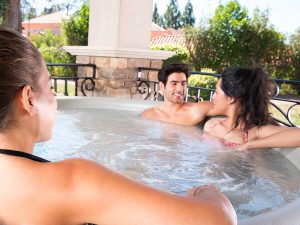
Ideal Hot Tub Temperature Settings
Here’s a quick reference for dialing in the right hot tub temperature based on what you’re using it for:
| Goal | Ideal Temperature |
|---|---|
| Relaxing soak | 100°F to 102°F |
| Sore muscle recovery | 102°F to 104°F |
| Maximum safe limit | 104°F |
| Children and pregnancy | Lower settings, closer to 100°F or below, with extra caution |
Fortunately, with Hot Spring and Caldera spas, your hot tub is always hot and ready to use. With full foam insulation, even on the coldest days your hot tub holds the temperature you set it to. Keeping your hot tub at your preferred temperature is also more energy efficient, since your heater doesn’t have to work overtime to reheat the water from a colder starting point.
Our question to you: what results are you looking to get from your soak today?
“I want to sleep better tonight”
According to an article on Women and Home written by Miriam Habtesellasie, building a soaking routine 90 minutes before bed can help you fall asleep around 10 minutes faster than average. The optimal temperature for a pre-sleep soak is 104 degrees Fahrenheit. We suggest a 20 minute soak to relax your mind and body before bed. Following this routine supports your circadian rhythm and can help you fall asleep faster and sleep more soundly.
“I want to feel energized in the morning”
Some of our customers have added hot tubbing to their morning routine to help them wake up feeling refreshed. Water temperature here comes down to personal preference. We suggest starting at 100 degrees and adjusting from there. Bring your coffee along and soak for 10 to 15 minutes to get your circulation moving and gently wake up your mind and body.
“I want to recover from physical stress”
The right recovery temperature depends on what feels comfortable for your body. Start at 100 degrees Fahrenheit and adjust from there. If you notice you’re sweating after a tough workout, try lowering the temperature closer to body temperature for a more comfortable soak. If your stress is coming from a long day at work instead, a slightly higher temperature can help create that “ahh” sensation and relax your mind and body together. A 15 minute soak is a good target for physical stress recovery. If you’re soaking after a workout, let your body cool down fully first, and the same goes for warming up before a workout or a run.
Overall, the right hot tub temperature usually comes down to personal preference and what results you’re chasing that day. Listen to your body, it will tell you what it needs. Your ideal setting will also shift with the seasons. On a warm summer day, your usual 102 degree morning soak might have you sweating before you’ve even left for work, so try easing the temperature closer to body temperature to get the results you’re after.
Creating a consistent routine will help you build hot tubbing into your everyday life and support a healthier routine over time. We encourage every current and future hot tubber to do their own research on hot tub temperature before soaking, and to check with a physician if you have a medical condition that hot water could affect. For general upkeep questions, our hot tub maintenance FAQ covers water care alongside temperature. If you have questions, contact your hot tub experts in New Jersey.
Frequently Asked Questions
What is the ideal hot tub temperature? Most healthy adults find 100°F to 102°F comfortable for a relaxing soak, while 102°F to 104°F works well for sore muscle recovery. 104°F is the maximum safe limit set by the CPSC and should be reserved for shorter soaks of 10 to 25 minutes.
Is 104 degrees too hot for a hot tub? 104 degrees Fahrenheit is the maximum temperature limit recommended by the CPSC, not an ideal everyday setting. It’s considered safe for healthy adults for shorter soaks, generally 10 to 25 minutes, but it isn’t recommended for children, pregnant women, or anyone with certain heart or blood pressure conditions without a doctor’s guidance.
What temperature should a hot tub be in winter? Most owners keep their hot tub at their normal preferred setting year round, typically 100°F to 102°F, rather than lowering it in winter. A full foam insulated spa, like those from Hot Spring and Caldera, holds that temperature efficiently even in cold weather, so there’s usually no need to adjust just because it’s winter.